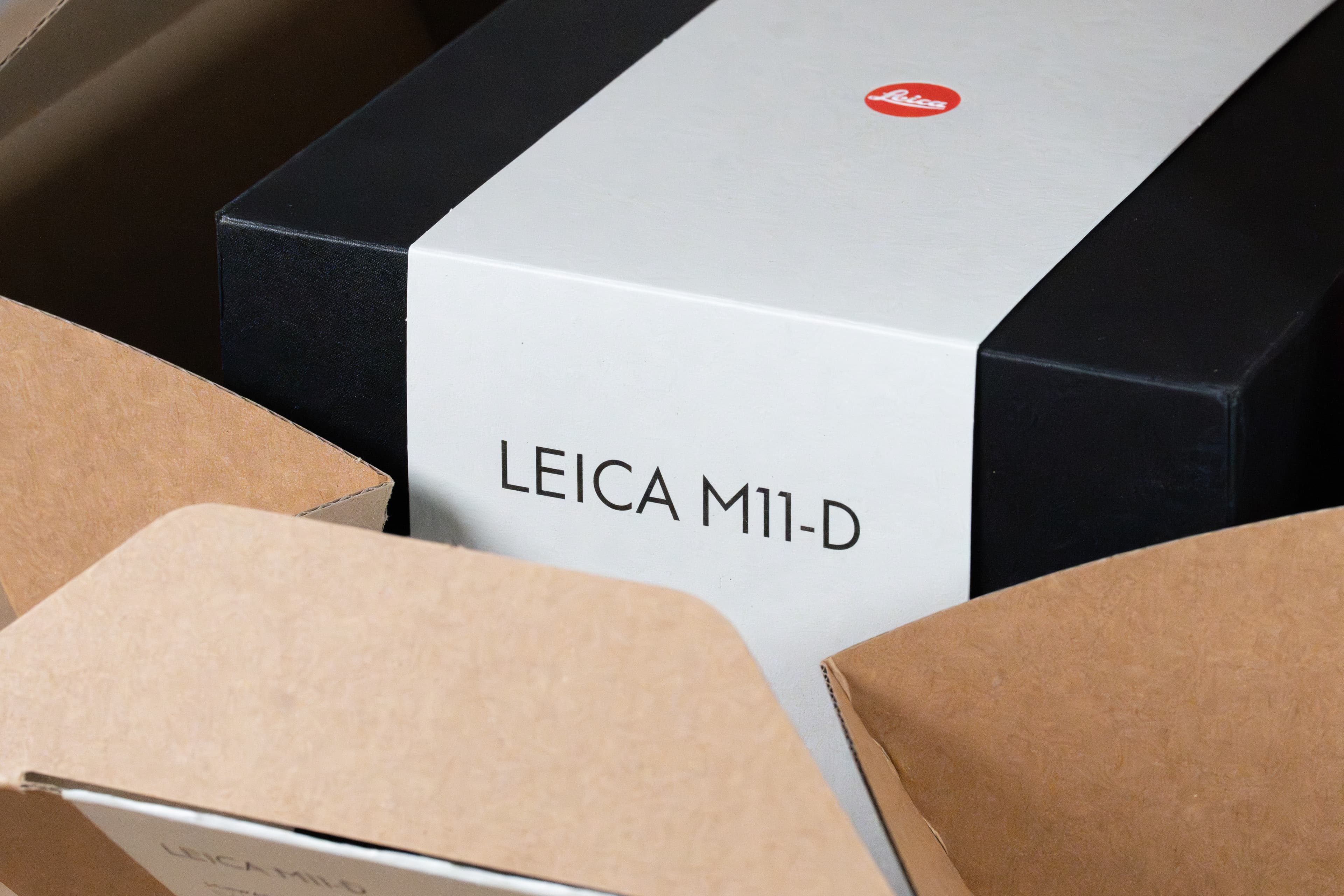
After landing at Charles de Gaulle Airport in Paris, I hurried to drop my bags at the hotel and headed straight for Leica Store Village Royal. I was there to pick up the M11-D I had asked them by email to hold for me.
My first trip abroad, and the M11-D I picked up at Leica Store Paris
In November 2024, I flew to Paris for Paris Photo 2024. It was my first trip abroad. At the time, the M11-D was almost impossible to find in stock in Japan. About two weeks before I left, I checked the website of the Leica store in Paris, and it said delivery in two to three days. I sent an email without much hope, but no reply came for a long time, and I had given up, thinking it would be hard to buy one even in Paris. Then, while standing in line at immigration, I checked my email and found a reply saying they would hold one for me.
If I was going to own a Leica, it had to be an M. I came to feel that way while using the M Monochrom (Typ 246). It only shoots in black and white, and you focus by yourself. I enjoyed those constraints. When the M11-D, with no rear screen, was announced, I knew I also wanted a Leica that could shoot in color, and I decided on instinct that the M11-D, which lets you enjoy photography within even more constraints, was the one for me.
It is a camera that costs more than 1.5 million yen. In the US, its price at launch was $9,395. Bought on my first trip abroad, in Paris for the first time, I think it will always be the camera I feel most attached to.
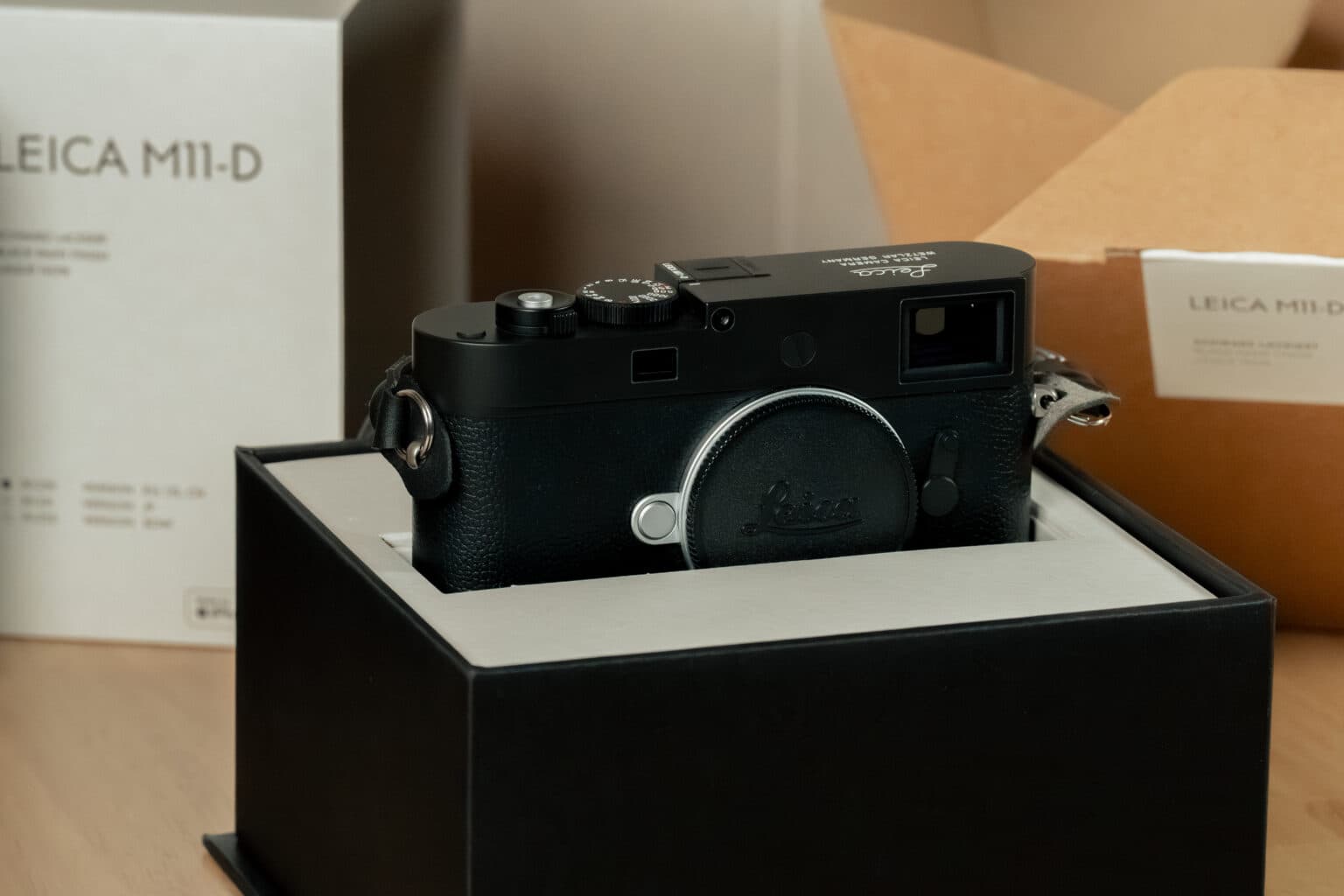
No rear screen: a camera you keep walking with, without looking at your shots
On the back of the M11-D, there is a large ISO dial instead of a screen. On top, there are only the power switch, the shutter button and the shutter speed dial. Detailed settings are done from a smartphone app.
To take a picture, I set the aperture, line up the double image to focus, and release the shutter. I can’t see the photo on the spot, so I don’t check anything and just walk on to the next place. With other cameras, you check the screen right after shooting and take another one. I usually end up doing that too.
With the M11-D, you can’t easily check whether you got the shot. What I like is that I can stop worrying about the photos and walk while looking only at the scene in front of me and the way the light falls. I don’t know what I’ve captured until I import the files on my computer at home. That wait is part of the fun.
A slightly out-of-focus autumn photo that brings back my first day with it
Soon after I came back from Paris, I went out alone one day because I wanted to photograph the autumn leaves. Of all the days I’ve spent with the M11-D, it was the first, and the one that left the deepest impression. The lens was the Summicron-M 50mm f/2 I already owned.
When I looked at it back home, this shot was out of focus. Shooting with the M11-D, that happens quite often. Even so, whenever I look at it, I remember looking up at this tree and pressing the shutter.
Because I couldn’t check it on the spot, the photo is what calls the memory back. Being moved by the scene, taking the picture, and the people around me looking at the same golden ginkgo trees. The feeling of that moment stays in this one frame, and even though it’s out of focus, it is an irreplaceable photo to me.
The camera I bring when I spend time with my family: the M11-D
For YouTube and my making projects, I mostly use other cameras. Even so, on days out with my family, I want to record them with the M11-D.
When I went back home for New Year’s, I spent time with my twin sister for the first time in a while, and we went on a family trip to Sendai. My twin sister in the car, the snowy scenery at the highway rest stop, the streets of Sendai at night: I shot them all with the M11-D. I want to keep these moments with a camera that lets me remember the whole day when I look back. That is why I choose this camera for time with my family.
The lens I chose for this camera: APO-Summicron-M 50mm f/2 ASPH.
Right after buying it I used the Summicron, but since the end of 2024 I have kept the APO-Summicron-M 50mm f/2 ASPH. on it. It is the lens I chose for this camera.
I like 50mm, so my candidates were the current 50mm lenses. I also considered the Summilux. With the M11-D, which has no rear screen and is focused through a rangefinder, I didn’t think I would often shoot wide open for heavy background blur. So I decided F2 was enough, and chose this lens.
The Summicron renders softly and gently. The APO-Summicron is sharp. I prefer this sharp rendering.
When the focus lands, a single flower seems to rise out of the frame. Even a small flower in a planting strip becomes a photo that catches the eye.
Who I’d recommend the M11-D to: those looking for a camera for life
You set both focus and exposure yourself, so it may take a little time to take each shot, and to get used to it. You’ll also miss focus sometimes. But that effort is what lets me concentrate on really looking at and observing the subject, one frame at a time. I think of the M11-D as a camera for enjoying that inconvenience. That said, these days I don’t find it inconvenient at all.
I keep feeling that the appeal of an M camera is how taking photos gradually becomes part of your body. Because the M11-D has no rear screen, I feel that sense being sharpened even further.
If you want to check every shot and make sure you bring home a good one, there are other cameras better suited to that. I’d recommend the M11-D to people who want a camera for life, to take photos that stay in their memory. The day you got it, and every day you shoot with it after that, stay with you along with the photos. It is by no means cheap, but I feel it gives me something worth more than its price.
It will soon be two years since I picked it up in Paris. The out-of-focus autumn photo, the photos from days out with my family: everything I’ve shot with this camera brings back that day whenever I look at it. The next time I go out with my family, I think I’ll be taking the M11-D with me again.
- Camera: Leica M11-D
- Lenses: Leica APO-Summicron-M 50mm f/2 ASPH., Leica Summicron-M 50mm f/2